Protect your HVAC during winter storms by clearing snow and ice, using a breathable cover, and checking air filters. You should also insulate exposed pipes, install a surge protector, keep vents clear, and schedule HVAC winter maintenance to keep your system safe and reliable.
During the winters, ice buildup, strong winds, and freezing temperatures often lead to frozen pipes, restricted airflow, power surges, and even complete system shutdowns. Sometimes, these problems can cause your HVAC system to stop working altogether – just when you need it!
In this guide, learn how to protect HVAC in winter. For professional HVAC maintenance, contact Direct Home Services at (860) 339-6001. We serve Middlefield, CT, and nearby areas.
7 Ways to Protect Your HVAC System in Winters
Below are ways to protect your HVAC system in winter:
1. Schedule a Winter HVAC Tune-Up
Scheduling HVAC maintenance during the winter prevents breakdowns, improves efficiency, and ensures your heating and cooling system is ready for extreme weather.
During a winter service, a licensed HVAC technician will clean components, test safety controls, inspect electrical connections, and confirm airflow throughout your home. This service also ensures your system is producing consistent heat and that no airflow obstructions or worn parts are holding it back. Regular tune-ups can also extend your system’s lifespan and reduce the need for emergency repair.
Benefits of winter HVAC tune-ups:
- Improve the performance of both indoor and outdoor units
- Catch early signs of failure before peak season
- Protect your heating and cooling system from storm damage
Book your winter tune-up by calling (860) 339-6001. We provide seasonal maintenance for homeowners in Middlefield, CT, and nearby areas.
2. Clear Snow and Ice from the Outdoor Unit
Snow and ice around your outdoor HVAC unit can restrict airflow, damage components, and cause your system to shut down unexpectedly.
When winter storms dump snow around the base or across the top of your HVAC unit, it prevents proper airflow and forces the system to work harder than necessary. Ice buildup on the coils or fan blades can trigger a system fault or prevent your heat pump from defrosting correctly.
Always clear at least 18–24 inches around the unit using a broom or soft brush. Never use a shovel or anything that could bend or crack the metal fins.
Remember to:
- Remove snow after each storm or drift
- Keep drainage paths open at the base
- Don’t chip or scrape ice with hard tools
If you are not sure your HVAC unit is safe to run after a storm, call (860) 339-6001 for an inspection.
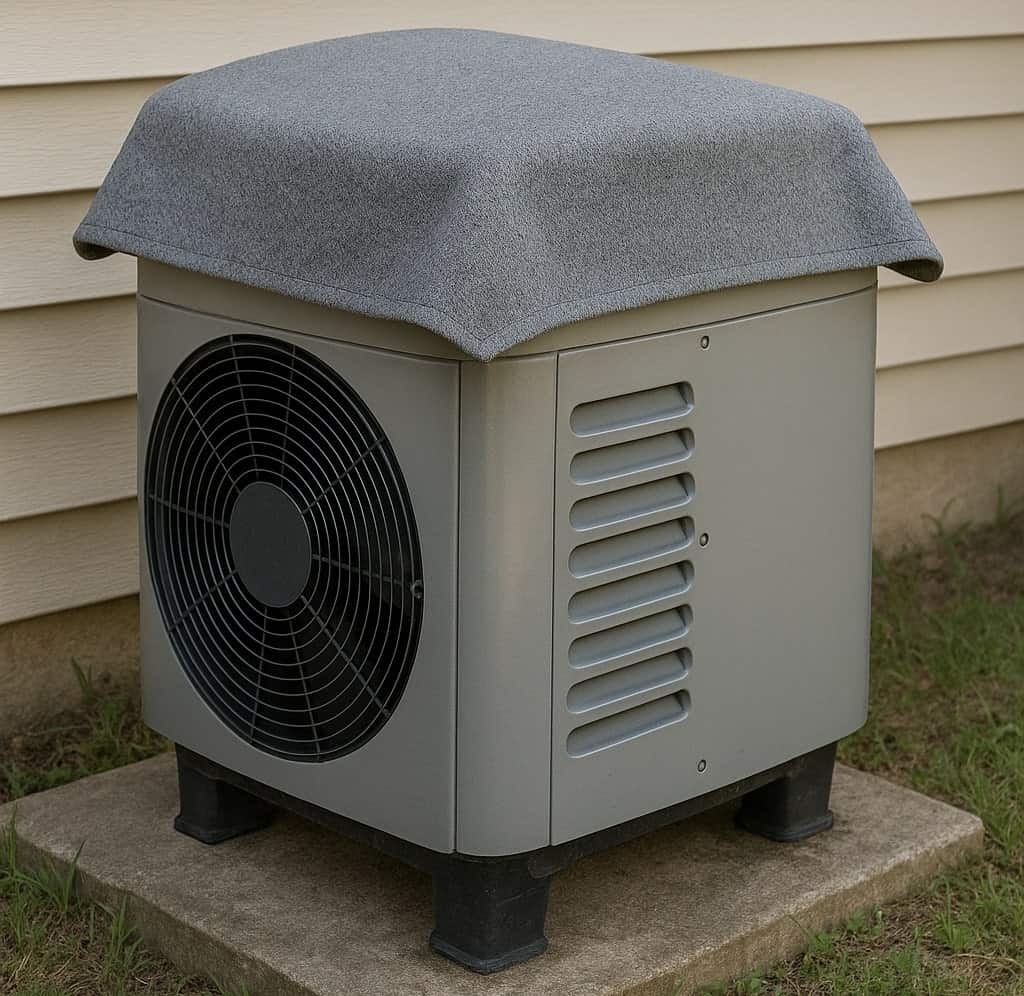
3. Cover the HVAC Unit with a Breathable Top Cover
A breathable cover protects your outdoor HVAC unit from falling snow and debris without trapping moisture that could lead to internal rust or corrosion.
During winter storms, ice and snow can accumulate on the top grill of your heat pump or air conditioning unit. This buildup restricts airflow and adds unnecessary strain on fan motors.
Instead of plastic tarps or makeshift coverings, we recommend using a purpose-built mesh or canvas top cover. This allows airflow while keeping heavy snow and debris off the most exposed parts of your HVAC unit.
Only cover the top of the unit and not the sides or base. Also, remember ot remove the cover before running the cooling cycle in spring.
4. Check and Replace Air Filters
Dirty air filters restrict airflow, reduce efficiency, and can cause your HVAC system to work harder during cold weather.
During a winter storm, your HVAC system runs more frequently to maintain indoor comfort. If the air filter is clogged with dust or debris, it limits air circulation. This leads to poor heat distribution and unnecessary wear on components. A blocked filter can even trigger system faults or reduce indoor air quality.
For best results, check your air filters monthly and replace them at least every 60–90 days. We recommend checking more frequently if you have pets, allergies, or use your heating system heavily during winter.
Follow these tips for air filter maintenance:
- Use the correct size and MERV rating for your system
- Mark replacement dates on your calendar or set a reminder
- Always check filters before and after a major storm
Call (860) 339-6001 if you need help with air filter replacement.
5. Insulate Exposed HVAC Pipes
Insulating exposed HVAC pipes helps prevent freezing, cracking, and system shutdowns during extreme cold.
Pipes that run through unconditioned areas – like basements, attics, crawl spaces, or along exterior walls – are especially vulnerable in winter. When temperatures drop suddenly, unprotected pipes can freeze and block refrigerant or condensate flow. They can also damage connected HVAC components like your heat pump or indoor coil.
Use foam pipe insulation sleeves or wrap exposed sections with insulating tape rated for cold-weather use. Focus on refrigerant lines, condensate drains, and any areas where piping is visible near the outdoor HVAC unit.
6. Install a Surge Protector
Installing a surge protector safeguards your HVAC system from sudden voltage spikes during winter storms and outages.
Power surges caused by downed lines, flickering electricity, or grid resets can damage sensitive HVAC components like circuit boards, compressors, and thermostats. These repairs are often expensive.
Install a whole-home surge protector at the electrical panel to regulate voltage before it reaches your HVAC unit and other appliances.
7. Keep Vents and Air Returns Unblocked
Blocked vents and return grilles reduce airflow, increase system strain, and can trigger HVAC faults during winter.
When furniture, curtains, or piles of snow block vents, your HVAC unit can’t circulate air properly. This restriction makes your heating system run longer, work harder, and potentially overheat. Limited airflow also prevents even heat distribution throughout your home, leaving cold spots and wasted energy.
Keep indoor supply vents and return grilles free of obstructions and regularly vacuum around them to remove dust and debris. Outside, make sure snow or ice isn’t covering the high-efficiency furnace or heat pump intake and exhaust pipes.
Central AC Winter Protection Tips
- Use a breathable top cover (no plastic tarps)
- Shut off power to the AC unit at the disconnect box
- Clear snow, ice, and debris from around the outdoor unit
- Check for signs of rodent nesting or trapped leaves
- Schedule a spring inspection before restarting the system
Tips for Gas and Electric Furnace Protection in Winters
- Replace air filters every 30–60 days
- Keep all vents and returns unblocked
- Test your thermostat and replace batteries if needed
- Listen for odd noises like rattling or short cycling
- Book a professional furnace inspection and cleaning
Heat Pump Protection Tips for Winter
- Clear snow and ice from around the outdoor unit after each storm
- Confirm the defrost cycle is functioning correctly
- Do not cover the heat pump – keep airflow unrestricted
- Clean out gutters above the unit to prevent dripping
- Insulate any exposed refrigerant lines to prevent freezing
Schedule Your Winter HVAC Maintenance Today
Schedule winter HVAC maintenance now to keep your system running safely and efficiently all season.
Storm-related issues like power surges, frozen pipes, and blocked airflow can be avoided with routine inspection and proper prep. Whether you use a furnace, heat pump, or central AC, preventative maintenance helps protect your equipment and extend its service life through Connecticut’s harsh winters.
Call (860) 339-6001 to book your winter HVAC tune-up. We’re located at 57 Ozick Dr Suite i, Durham, CT 06422 and provide seasonal maintenance for homeowners across the region.
FAQs
Do you cover an AC unit in winter?
You can cover the top of the AC unit with a breathable cover to protect it from falling snow and debris.
Should I cover my heat pump in winter?
There is no need to cover heat pumps in winter because they run year-round and need unrestricted airflow. Covering them can interfere with the defrost cycle, leading to performance issues.
How do I keep an HVAC unit from freezing in winter?
Clear snow and ice from around the unit regularly and insulate any exposed pipes. Make sure the defrost cycle is functioning and schedule winter maintenance to catch issues early.
Is it a good idea to cover your air conditioning unit in the winter?
Yes, but only the top should be covered and only with a breathable cover made for AC units. This protects the internal components without trapping condensation.
How do you protect an HVAC system in the snow?
Keep snow cleared from around the outdoor unit, install a surge protector, and check filters and vents often. Insulate exposed piping and schedule a professional winter tune-up to avoid storm-related damage.